The Zero-Post Production System - How to Eliminate the Video Editing Bottleneck
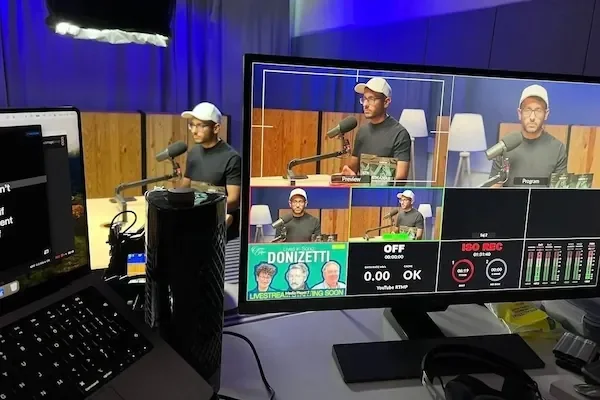
The Zero-Post Production System in action: recording, switching, and rendering as-live to achieve maximum asset velocity.
Podcast studio hire is a dead end.
It’s time to stop wasting budget on studio access, and start buying outcomes that truly drive growth.
Traditional video podcast production is broken.
In the current creator economy, businesses are still locked into a studio rental model that creates as many problems as it solves.
They rent the studio. They record the footage. And then their content quietly dies a slow death of post-production overwhelm.
I want better for myself and my clients.
That is why I’m moving Creative Kin to a Zero-Post Production System.
TL;DR - The Executive Summary
The Problem - Traditional video podcast studio hire creates 'Production Debt' - a backlog of unedited footage that depreciates in value daily.
The Solution - The 'Zero-Post Production System' renders real-time as-live edits to deliver finished video files the moment the cameras stop rolling.
The Benefit - This maximises asset velocity - allowing brands to publish within 24 hours rather than the six weeks or more many brands experience.
What is Production Debt?
When you hire a traditional video podcast studio - you aren't buying a video asset.
You are buying a to-do list.
Yes, studio hire buys you access to cinema-grade cameras - you get the premium lenses, the pro lighting and the broadcast mics (at least you should do).
But recording multicam video creates a massive operational hurdle to get over - post-production editing and rendering.
At Creative Kin this is what we call the Production Debt: the accumulation of unedited footage that sits on hard drives. It is work in progress (WIP) digital inventory that has not yet been converted into value.
“Organisations do not have a content problem - they have a workflow problem. They are drowning in raw materials while starving for finished products.”
In Lean Manufacturing theory, inventory that sits idle is considered waste.
It costs money to store. It costs mental energy to manage. And it generates zero revenue until it ships.
This applies to digital content too, just as much as it does to manufacturing.
Until your content is published, it generates zero value for your brand.
The Hidden Cost of Traditional Studio Hire
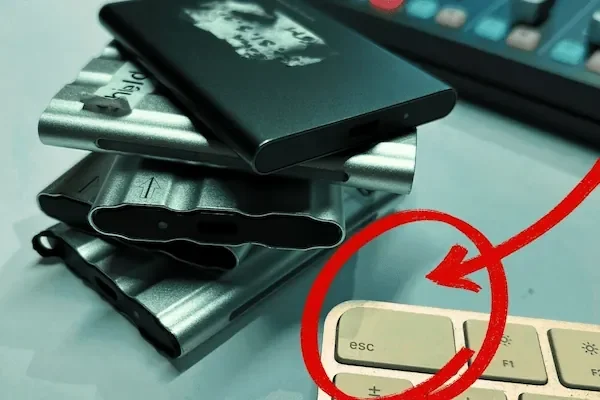
Searching for the escape hatch? It’s not on your keyboard. It’s in your workflow. The Zero-Post Production System turns liabilities into assets in under 24 hours.
Production Debt multiplies like the compound interest rate on a credit card.
The longer your footage sits on a hard drive - the more expensive it becomes to release.
Storage Costs - The physical cost of managing terabytes of individual video tracks.
Cognitive Load - The open loop in your brain: knowing you have hours of footage to review and edit creates decision fatigue, procrastination and stress.
Opportunity Cost - The audience growth you miss every single day you do not publish.
Most creators focus on the studio hire rate.
They ignore the reality that if the recorded assets cannot be exploited promptly, paying for a studio is simply a resource drain.
“Idle “threads” don’t sit passively in memory, waiting quietly to be summoned by your neural processor, they’re instead an active presence, generating middle-of-the-night anxiety, and pulling at your attention... the more commitments lurking in your mind, the more psychic toll they exert.”
And when that happens, instead of watching their audience grow, they just see their stack of full SSDs get taller and taller.
And the impact is not limited to the lack of ROI on content that has not been published.
A backlog of unedited video podcasts creates a cognitive overhead too. It’s stressful, and it chips away at your focus on other tasks.
As productivity guru Cal Newport points out, “the more commitments lurking in your mind, the more psychic toll they exert”.
That’s not an outcome anyone wants to spend money on.
Case Study: The £230 Studio Hire That Cost 6 Weeks
If this is what the inside of your brain feels like while you’re trying to publish content, you’re doing it wrong. It’s time to stop accumulating Production Debt.
Production debt is not just a theory. It costs actual money.
Here is a specific example from my own client roster at Creative Kin that illustrates the studio rental production debt trap.
One of our regular studio hire clients came in to record a two-hour special with one of their guests.
The studio hire cost was £230.
We spent the afternoon in the studio recording the content.
It was engaging, sounded great, and looked fantastic. Smiles all round.
The same afternoon I transferred the files to the client: four ISO camera angles, two individual mic channels and a stereo audio mix.
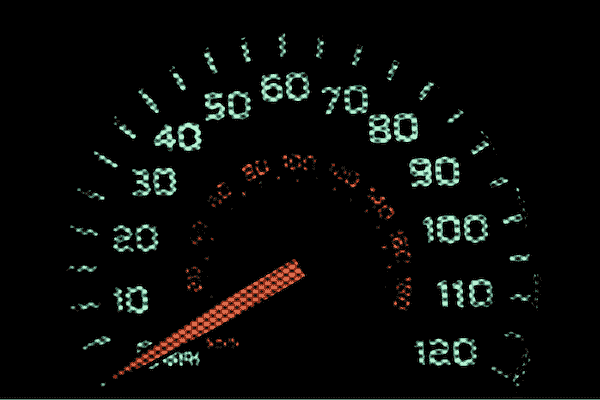
Zero mph: the Asset Velocity of your content while it’s waiting to be edited.
Three weeks later, I got an email from the client asking for a refile.
Their editor had been unavailable and they were only now ready to get started.
So we refiled the assets - no problem.
But it then took another three-and-a-half weeks to get the content published.
And during that time I know that client was managing the editor remotely while dealing with a family emergency.
The Asset Velocity Problem
Let’s remind ourselves of the numbers.
Time from Record to Publish: 6+ Weeks.
Studio Cost: £230.
Asset Velocity: Near Zero.
For at least three weeks, the content had been recorded, but it was not moving toward publication at all.
And during that time, it was not generating leads, not building trust, not serving any function for the client whatsoever.
What started as Low Asset Velocity came within a hair’s breadth of No Asset Velocity.
As in life, events in business can be unpredictable.
And if you are still paying off your Production Debt when things go sideways, your content is doing nothing to get you back on track.
There is no ROI on content that doesn’t get published.
What is a Zero-Post Production System?
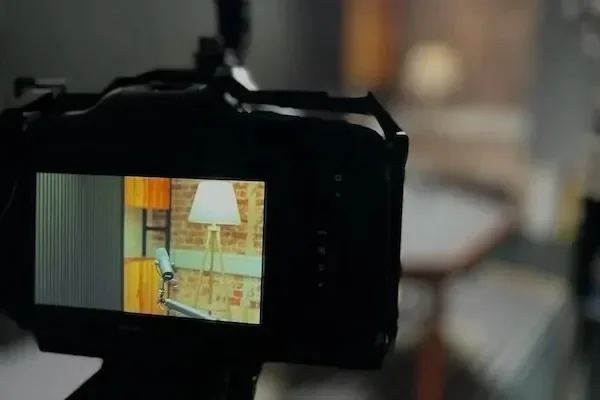
I built the best video podcast studio in London. But I don’t want you to hire it.
This is why I don’t want you to hire the Creative Kin studio.
If I sell you studio time, I am simply selling you a problem to solve - which is hardly a winning business proposition.
Instead, I want you to invest in a Zero-Post Production System.
When you spend your content budget, I want you to buy the outcome, not the process.
I want you to skip over the editing bottleneck entirely, and get your content out into the world, right now.
And if not now, as near to now as can be done without anyone getting injured.
How Real-Time Rendering Works
In a traditional video podcast shoot, you gather separate video and audio ISO tracks.
You transfer the assets, import them into editing software, synchronise everything, then build an edit.
Yawn.
Even for a skilled video editor, that is at least a half-day of work for a standard podcast episode - probably more.
We have engineered an As-Live Architecture that bypasses this phase.
Live Capture - We feed our 6K camera signals directly into a production switcher.
Live Vision Mixing - We switch camera angles as-live as we record.
Same-day Export - We export a real-time render of the as-live edit - immediately.
The moment we stop recording we have arrived at the same stage as hours of manual post-production.
For our As-Live clients, when they log on the next day, there is a link waiting in their inbox to download the complete edit.
The finished video edit is in their hands in less than 24 hours.
Accelerate Your Asset Velocity
In the 2026 attention economy - speed is a quality metric.
If you want to move from a traditional model to a Zero-Post Production model - you need to change your philosophy.
1. Trust Your Decisions
Standard thinking says you accept a long post-production phase as a necessary evil.
But 'post-production' is often simply a euphemism for 'deferred decision making'.
Traditional workflows leave you making creative editorial decisions weeks after the energy in the studio has faded.
It is unnecessary.
If your recording prep is done well, you’ve made all the most important decisions before you start recording.
You already know who your guest is, why you are speaking with them, what you want to ask them and what you want them to say.
And if you have a script or list of questions that makes any sense at all, you already have a narrative framework for your content.
So the editorial heavy lifting is already done.
Why do it twice?
“The only purpose of starting is to finish. While ‘starting’ is fun - shipping is the only thing that counts. If it doesn’t ship - it doesn’t exist.”
2. Commit to the Cut
The 'As-Live' workflow requires trust:
Trust in your content, and trust in your production process.
You switch the angles live.
You commit to the narrative flow.
You recognise the value of imperfections.
The outcome?
No edit suite analysis paralysis, no content production cognitive overheads, and a content publication tempo that leaves your competitors wondering what the hell just happened.
3. Deliver the File
The goal is Asset Velocity.
We define Asset Velocity as the speed at which a recorded idea reaches the market.
Video Podcast Production: The Old Way vs The Zero-Post Way
| Item | Studio Hire | Zero-Post Production |
|---|---|---|
| Deliverable | Raw ISO Files & A 'To-Do List' | A Finished - Ready-to-Publish Edit |
| Turnaround | 6+ Weeks (High Friction) | < 24 Hours (High Velocity) |
| Bottleneck | Post-Production / Editing | None (Decisions Front-Loaded) |
| Brand Value | Production Debt (Liability) | Asset Velocity (ROI) |
| Cognitive Load | 'Deferred Decision Making' | 'Frictionless Completion' |
| Model | Buying Access (Rent the room) | Buying Outcomes (The Result) |
Traditional studio hire saddles you with a Production Debt.
The Mistakes Fallacy - Why 'As-Live' Recording Builds Trust
One of the biggest questions around the Zero-Post Production System is how to handle mistakes.
Clients ask - "What if I mess up? What if the lighting isn't perfect?"
They are afraid of imperfections and mistakes.
But the imperfections are precisely what makes your content authentically human.
In an age of AI-generated perfection - human flaws and 'live energy' are premium signals.
So I would argue that the fear of mistakes or imperfection is misplaced - or at least mis-labelled.
It would be better described as a fear of authenticity.
And in a marketing landscape where business growth is led by personal branding, authenticity is your most valuable asset.
Because what makes you authentic is precisely what sets you apart from every other brand and content creator out there.
Content That Connects
My mission at Creative Kin has always been to make it easier for brands to achieve broadcast standards for their digital content
So adapting an as-live workflow that was standard practice in my BBC World Service career is a long-held ambition.
It requires professional discipline, and preparation before you press record.
But most importantly - it requires a shift in mindset.
It is not good enough for me that a client can leave our studio and still have a mountain to climb.
I launched Creative Kin to solve expertise and capacity deficits for brands struggling to realise their content ideas.
So why would I offer a service that adds to their overload?
Build your Authority Engine
What is your content for if not to build authority for you and your brand?
The Zero-Post Production System is the foundation of Creative Kin’s Authority Engine content system - an end-to-end content marketing framework designed to deliver one thing: brand growth.
And you can learn how to implement the Zero-Post Production System to support your own brand growth in the Authority Engine newsletter.
Subscribers discover
A detailed breakdown of the Zero-Post Production System workflow
The exact tools we use at Creative Kin with our clients
How the Zero-Post Production System can be the foundation of your own content Authority Engine
If you want to move from drowning in raw materials to starving for finished products - the blueprint is available.
The Authority Engine newsletter is where I share exactly how I build brand authority for Creative Kin, and Creative Kin’s clients - including the data from our own channels.
But it is only available to email subscribers.
If you want to see for yourself exactly what moves the needle - join us inside now.